How to Create a Layered Desert Landscape
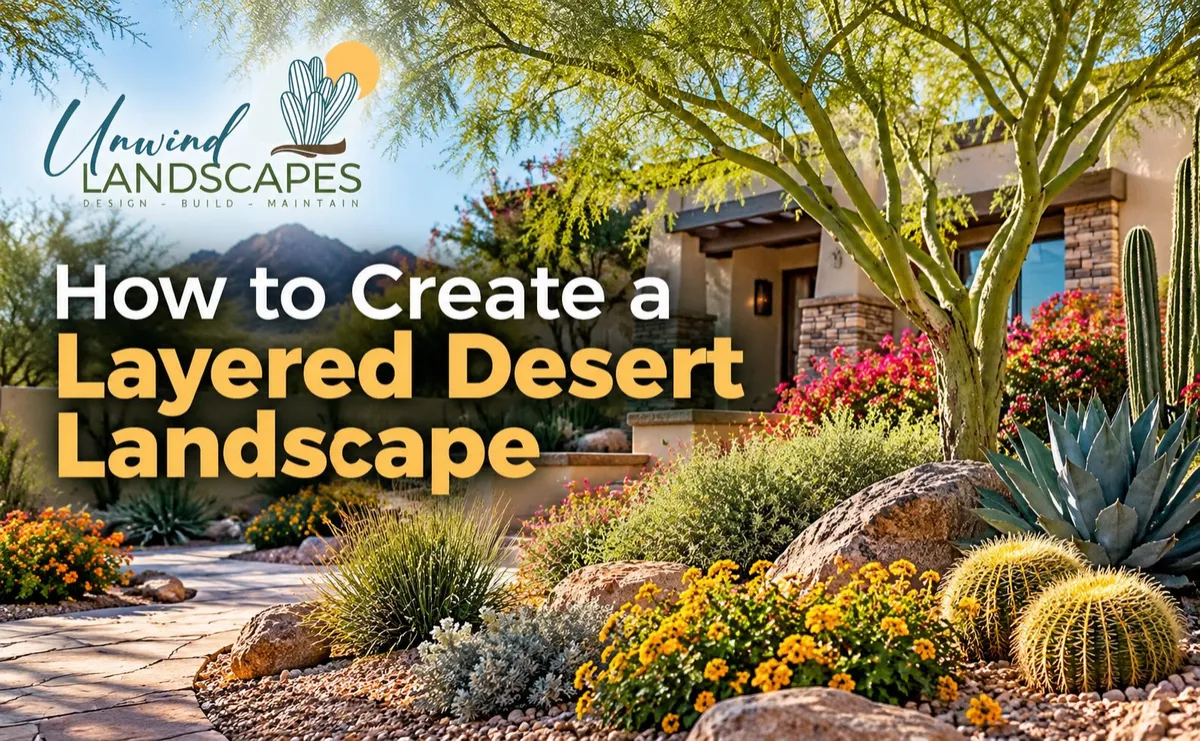
A beautifully designed desert landscape is about more than arranging a few cacti, planting shrubs, and covering the ground with decorative gravel. The most impressive Arizona landscapes use a technique called layered landscape design, combining trees, shrubs, flowering plants, ornamental grasses, and natural stone to create depth, dimension, and visual interest. When thoughtfully planned, these elements work together to transform an ordinary yard into a sophisticated outdoor environment that feels both natural and inviting.
For homeowners throughout Phoenix, Scottsdale, Mesa, Gilbert, and surrounding Valley communities, layered desert landscaping offers an excellent way to create a visually rich outdoor space while embracing water-conscious design principles. Whether you're refreshing an existing landscape or planning a complete backyard transformation, understanding how to combine different heights, textures, and colors is the foundation of a successful design.
Start with the Upper Layer: Desert Trees and Vertical Structure
The upper layer establishes the overall structure of your landscape. Desert-adapted trees such as palo verde, desert willow, and appropriately selected mesquite varieties provide height, architectural character, and valuable shade. Their canopies also create a natural transition between your home's architecture and the surrounding landscape.
When placing trees, consider mature size, sun exposure, nearby structures, and where shade will provide the greatest benefit. A carefully positioned palo verde, for example, can become a beautiful focal point while providing filtered shade for compatible plants beneath its canopy.
For a more dramatic appearance, upright cacti and other vertical accent plants can complement the tree canopy, creating interesting silhouettes and visual contrast throughout the yard.
Build the Middle Layer with Shrubs and Flowering Plants
The middle layer is where your desert landscape begins to develop fullness, personality, and seasonal color. This area typically features medium-height shrubs, flowering perennials, and sculptural plants arranged in natural-looking groups.
Texas sage, red bird of paradise, fairy duster, and suitable varieties of desert ruellia can provide contrasting foliage, colorful blooms, and interesting textures. Plants such as red yucca and selected agave varieties introduce bold architectural forms that contrast beautifully with softer, rounded shrubs.
Rather than placing plants in perfectly straight rows, consider arranging them in staggered groupings with varied spacing. Repeating a few complementary plant varieties throughout the landscape creates continuity without making the design appear overly uniform. Always account for mature plant sizes to prevent overcrowding and unnecessary maintenance.
Complete the Lower Layer with Groundcovers and Texture
The lowest planting layer visually connects larger plants to the ground, softening the transition between shrubs, walkways, decorative stone, and open spaces.
Low-growing plants such as trailing lantana, blackfoot daisy, and desert marigold can introduce seasonal flowers and contrasting textures. Ornamental grasses and grass-like plants, including deer grass and bear grass, add movement and a softer appearance that balances the stronger shapes of cacti and succulents.
This layer works especially well along walkways, around accent boulders, and near outdoor living areas. Selecting plants with compatible sunlight and irrigation requirements helps create a landscape that is both attractive and easier to maintain.
Add Depth with Natural Stone, Boulders, and Hardscaping
Plants aren't the only elements that create layers. Natural stone, decorative gravel, retaining walls, and carefully placed boulders can add visual depth while defining different areas of your property.
Large boulders partially embedded in the ground create a more natural appearance, especially when surrounded by clusters of desert plants. Curved pathways, subtle elevation changes, and complementary gravel colors can further enhance the sense of dimension.
Combining natural stone in desert landscape design with layered plantings helps create an outdoor environment that feels cohesive rather than a collection of unrelated landscaping features.
Use Color, Contrast, and Repetition for a Cohesive Design
Successful layered desert landscaping relies on balance. Silvery foliage, deep green shrubs, blue-green agaves, and flowering plants in shades of yellow, orange, purple, and red can create a beautiful desert-inspired color palette.
The key is to avoid introducing too many competing elements. Instead, select a limited number of complementary plants and repeat them strategically throughout the landscape. Contrast rounded shrubs with upright accents, soft grasses with rugged boulders, and flowering plants with evergreen foliage.
Thoughtful repetition creates visual rhythm, guiding the eye naturally from one area of the landscape to another.
Design for Arizona's Climate and Long-Term Sustainability
A layered landscape must do more than look attractive on installation day. Phoenix's intense summer temperatures, reflected heat, and limited rainfall make proper plant selection and irrigation planning essential.
Group plants by water needs, incorporate efficient drip irrigation, and consider how shade patterns change throughout the day. Proper spacing also encourages healthy growth and allows each landscape layer to develop naturally.
With professional planning, a layered desert landscape can provide lasting beauty while supporting water conservation and manageable maintenance requirements.
Frequently Asked Questions About Layered Desert Landscaping
What is layered desert landscaping?
Layered desert landscaping combines plants of different heights, shapes, and textures to create a visually balanced outdoor environment. Trees form the upper layer, shrubs and flowering plants establish the middle layer, and groundcovers, grasses, and natural materials complete the lower layer.
Can layered desert landscaping be low maintenance?
Yes. Selecting desert-adapted plants, allowing adequate growing space, grouping plants with similar watering needs, and installing efficient irrigation can significantly reduce ongoing maintenance compared with poorly planned landscapes.
What plants work best for a layered landscape in Phoenix?
Palo verde, desert willow, Texas sage, red yucca, fairy duster, blackfoot daisy, and deer grass are among the best options to consider. Final selections should reflect your property's sunlight, soil conditions, available space, and irrigation requirements.
Create a Beautiful Layered Desert Landscape with Unwind Landscapes
At Unwind Landscapes, we specialize in creating custom outdoor environments that combine natural beauty, functional design, and landscaping solutions suited to Arizona's desert climate. From selecting complementary plants to integrating natural stone, irrigation, and outdoor living features, our team brings every element together into a cohesive landscape design.
Proudly serving Phoenix, Scottsdale, Tempe, Mesa, Gilbert, Glendale, Peoria, Cave Creek, and surrounding communities, Unwind Landscapes helps homeowners transform ordinary yards into distinctive outdoor spaces.
Ready to elevate your property? Contact Unwind Landscapes to discuss your custom desert landscape design.
Explore More Desert Landscaping Ideas
Discover how professional Phoenix landscaping services can transform your property with custom planting designs, hardscaping, and efficient irrigation. For additional inspiration, explore our guide to building a yard that survives Phoenix summers.
Disclaimer: This article is intended for general informational and entertainment purposes only and should not be considered professional advice. Always consult a qualified professional regarding your specific needs or circumstances.