How to Prevent Soil Erosion in Sloped Desert Yards
Sloped yards can add beauty, depth, and dimension to your landscape, but they also come with unique challenges—especially in Arizona's desert climate. Heavy monsoon rains, loose desert soils, and sparse vegetation can quickly lead to erosion, washing away valuable soil, exposing plant roots, and damaging your landscape investment.
At Unwind Landscapes, we specialize in designing outdoor spaces that are both beautiful and built to withstand the Arizona environment. With the right landscaping techniques, you can protect your property from erosion while creating a stunning, low-maintenance yard.
Why Soil Erosion Happens in Desert Landscapes
Desert soils often contain loose sand, decomposed granite, and rocky materials that are easily displaced when water flows downhill. During Arizona's monsoon season, a brief but intense storm can generate enough runoff to carve channels through your landscape and wash away mulch, gravel, and topsoil.
Signs of erosion include:
Exposed plant roots
Small trenches or washouts after rain
Gravel collecting at the bottom of slopes
Bare patches where soil has disappeared
Standing water or muddy runoff
Addressing these issues early can prevent more expensive repairs later.
Install Retaining Walls for Long-Term Stability
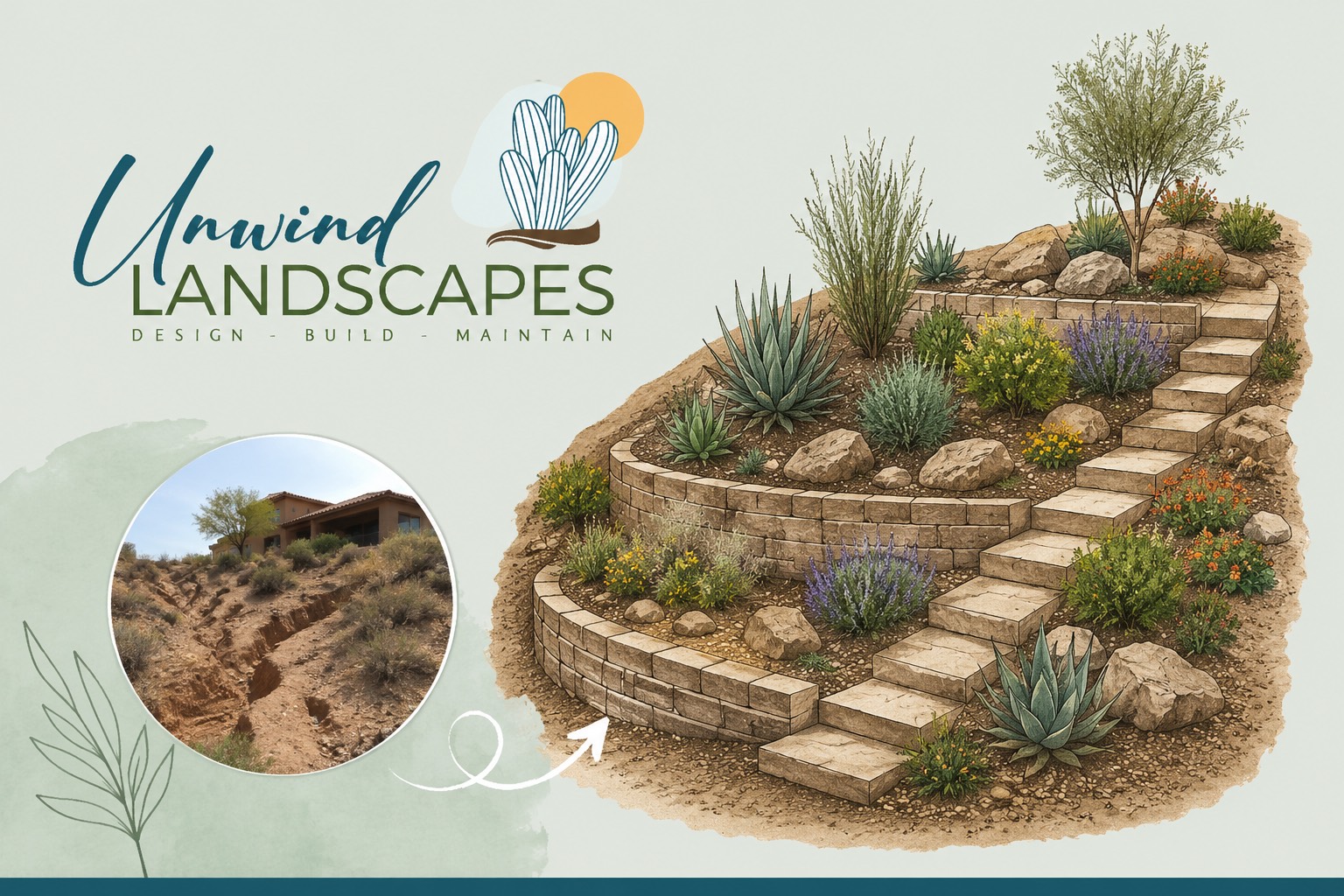
Retaining walls are one of the most effective solutions for preventing erosion on steeper slopes. By creating level terraces, retaining walls slow the movement of water and reduce the force of runoff before it reaches lower elevations. Properly designed retaining walls also create additional planting space while improving the overall appearance of your yard. Terracing and retaining structures are widely recognized as effective erosion-control strategies for sloped landscapes.
Natural stone, decorative block, or boulder retaining walls can all provide lasting stability while complementing your home's architecture.
Choose Deep-Rooted Desert Plants
Plants play an essential role in holding soil together. Their root systems bind the soil, reduce runoff, and improve long-term slope stability. Vegetation is among the most effective natural methods for reducing erosion on hillsides.
Excellent erosion-control plants for Arizona include:
Desert Ruellia
Damianita
Trailing Lantana
Red Yucca
Agave
Deer Grass
Desert Spoon
Native ornamental grasses
Low-growing groundcovers
Combining shrubs, ornamental grasses, and groundcovers creates multiple root layers that strengthen the soil over time.
Use Decorative Boulders and Natural Rock
Large boulders do more than create visual interest—they also help slow water movement across slopes. Strategically placed rocks break up runoff, reduce water velocity, and help prevent soil from washing downhill.
Decorative boulders paired with drought-tolerant plants create a natural-looking landscape that blends beautifully into the Arizona desert.
Improve Drainage Before Problems Develop
One of the biggest causes of erosion is uncontrolled water flow. Instead of allowing rainwater to rush straight down a slope, professional drainage solutions redirect water safely through the landscape.
Depending on your property, erosion control may include:
Dry creek beds
French drains
Swales
Catch basins
Channel drains
Grading adjustments
Managing runoff before it accelerates downhill helps protect both your landscaping and your home's foundation.
Apply the Right Mulch
Mulch helps retain moisture, regulate soil temperatures, and protect exposed soil from heavy rainfall. On sloped areas, however, selecting the proper mulch is important.
Shredded bark or coarse organic mulch tends to stay in place better than lightweight bark nuggets, while decorative rock mulch often provides an excellent long-term solution for desert landscapes. Covering exposed soil with mulch and vegetation helps reduce erosion while improving moisture retention.
Landscape Along the Contours
Rather than planting in straight rows running downhill, professional landscape designers often install plants following the natural contours of the slope. This slows water movement and allows more moisture to soak into the soil instead of carrying it away. Contour-oriented planting and terracing are recognized methods for reducing runoff and minimizing erosion.
This approach also creates a more natural, visually appealing landscape.
Incorporate Hardscape Features
Well-designed hardscaping can help stabilize sloped properties while adding functionality.
Popular erosion-control features include:
Stone stairways
Paver walkways
Terraced patios
Boulder accents
Raised planting beds
When properly integrated into the overall landscape design, these features help direct water while creating attractive outdoor living spaces.
Trust Arizona Landscape Experts
Every sloped yard is different. Factors like soil composition, drainage patterns, elevation changes, and sun exposure all influence the best erosion-control strategy.
At Unwind Landscapes, we create customized landscape designs that not only enhance your property's beauty but also provide lasting protection against erosion. From retaining walls and drainage systems to drought-tolerant plantings and decorative hardscapes, our experienced team delivers solutions built specifically for Arizona's unique desert environment.
If your sloped yard is experiencing erosion—or you're planning a new landscape installation—contact Unwind Landscapes today. We'll help you design an outdoor space that's beautiful, durable, and built to stand the test of time.
Frequently Asked Questions
What is the best way to stop erosion on a sloped yard?
A combination of retaining walls, proper drainage, deep-rooted desert plants, decorative boulders, and professional grading typically provides the most effective long-term erosion control.
Can desert plants really prevent soil erosion?
Yes. Many native and drought-tolerant plants develop extensive root systems that stabilize soil, reduce runoff, and help prevent erosion while thriving in Arizona's climate.
Do retaining walls always need to be installed?
Not always. Gentle slopes may only require improved drainage, strategic planting, mulch, or decorative rock. Steeper grades often benefit from retaining walls or terraced landscaping for maximum stability.
Suggested Meta Title:
How to Prevent Soil Erosion in Sloped Desert Yards | Unwind Landscapes
Suggested Meta Description:
Learn how to prevent soil erosion in sloped Arizona desert yards with retaining walls, drainage solutions, native plants, decorative boulders, and professional landscape design from Unwind Landscapes.
At Unwind Landscapes, we're here to help every step of the way. As your professional Phoenix Landscapers, we are experts at Landscape Maintenance and complete Landscaping Design and Installation. Let's make your outdoor space unforgettable together with a Free Landscaping Design Estimate.