How to Blend Hardscape and Softscape for a Balanced Desert Landscape Design
Creating a beautiful Arizona landscape isn't simply about choosing attractive plants or installing elegant pavers—it's about finding the right balance between hardscape and softscape. When these two essential design elements work together, your outdoor space becomes more functional, visually appealing, and easier to maintain.
In the Phoenix area, where water conservation and year-round outdoor living are important, blending hardscape and softscape thoughtfully creates a landscape that complements the desert environment while adding comfort, curb appeal, and long-term value.
Understanding Hardscape vs. Softscape
Before designing your outdoor space, it's helpful to understand the difference between these two key landscape components.
Hardscape
Hardscape refers to the permanent, non-living features that provide structure and function throughout your yard. These elements often include:
Paver patios
Walkways and pathways
Retaining walls
Decorative boulders
Fire pits
Outdoor kitchens
Seating walls
Stone borders
Water features
Hardscape creates the framework that organizes your landscape and defines how people move and gather outdoors.
Softscape
Softscape includes all of the living elements that add color, texture, movement, and seasonal beauty, including:
Trees
Shrubs
Desert plants
Ornamental grasses
Groundcovers
Flowering plants
Succulents
Cacti
Artificial turf or natural lawn areas
These elements soften the appearance of stone and concrete while bringing life to your landscape.
Start with the Outdoor Living Areas
The best landscape designs begin by identifying how you want to use your yard.
Ask yourself:
Do you enjoy entertaining guests?
Would you like an outdoor kitchen?
Is shade important?
Do you need room for children or pets?
Would a quiet sitting area fit your lifestyle?
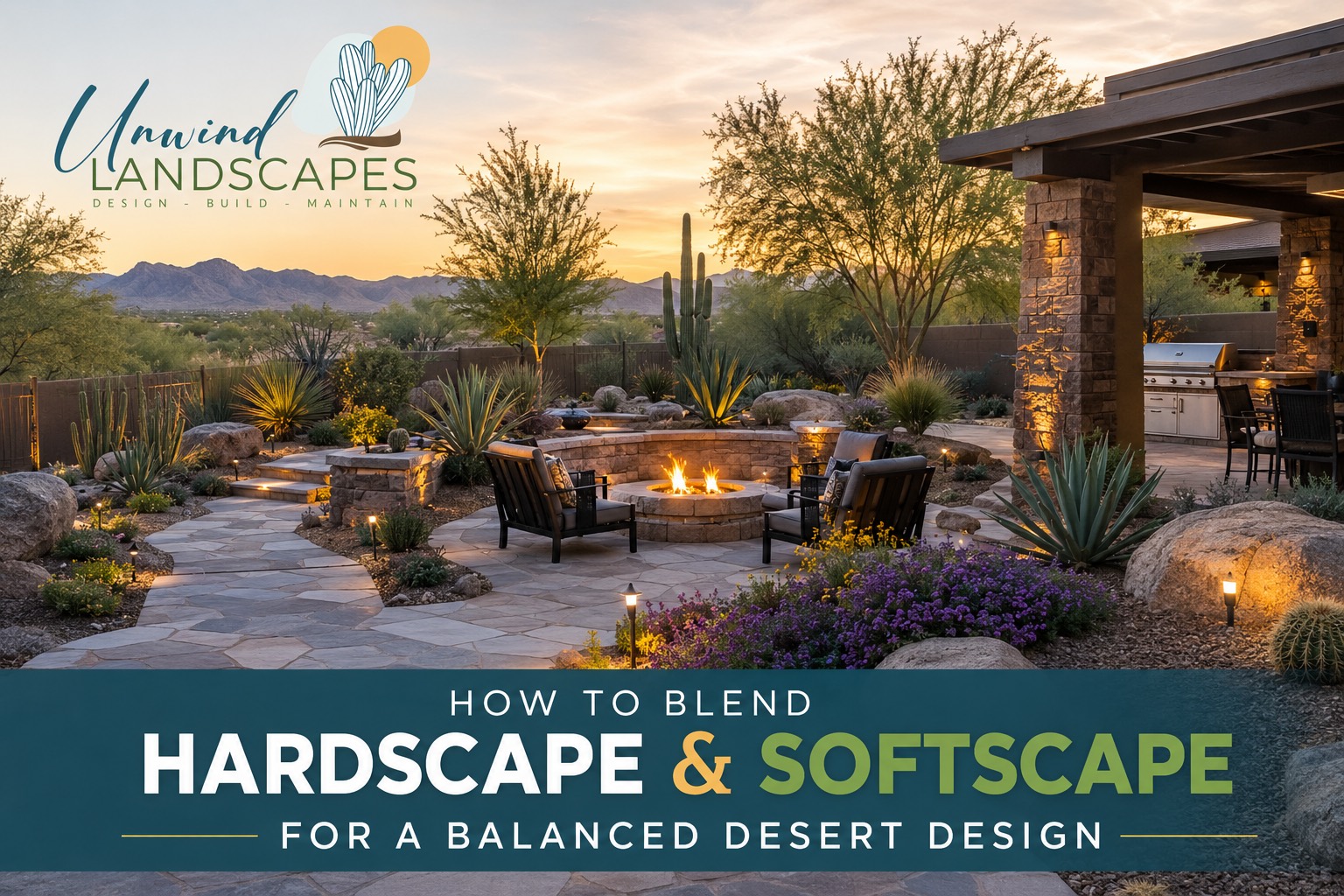
Once these functional spaces are established, the hardscape can be designed to connect them naturally with patios, walkways, and gathering spaces. The surrounding plants then enhance each area rather than compete with it. This design-first approach helps create cohesive outdoor spaces that blend beauty, comfort, and long-term functionality.
Use Hardscape to Create Structure
One of the biggest mistakes homeowners make is installing plants without a clear layout.
Hardscape provides visual organization by defining outdoor "rooms" within your property.
Examples include:
A paver patio serving as the main entertaining area
Decorative walkways connecting different sections of the yard
Retaining walls adding elevation changes
Stone borders outlining planting beds
Fire pit seating areas becoming focal points
These structural features make the entire landscape feel intentional rather than random.
Let Plants Soften the Space
Once the structural elements are in place, softscape brings warmth and natural beauty to the design.
Rather than filling every empty space with plants, professional designers carefully layer vegetation using varying heights and textures.
A balanced planting plan may include:
Taller shade trees for vertical interest
Medium shrubs around patios
Ornamental grasses for movement
Flowering desert plants for seasonal color
Agave and cacti as sculptural focal points
Groundcovers to reduce exposed soil
The goal is to complement—not hide—the hardscape features.
Mix Textures for Visual Interest
Some of the most attractive desert landscapes rely on texture rather than excessive color.
Pairing different materials creates a sophisticated, natural appearance.
Consider combinations like:
Smooth concrete with ornamental grasses
Natural stone with flowering shrubs
Decorative gravel beside agave
Steel edging with soft groundcovers
Large boulders surrounded by low-growing desert plants
These subtle contrasts create depth while maintaining a clean, modern aesthetic.
Don't Overdo Either Element
A balanced landscape avoids extremes.
Too much hardscape can make a yard feel hot, sterile, and uninviting.
Too much softscape may increase maintenance, water usage, and visual clutter.
Instead, aim for a landscape where each element complements the other.
Many professionally designed Arizona landscapes feature generous hardscape for usability, accented by thoughtfully placed, drought-tolerant plantings that provide softness without overwhelming the space. This approach also supports water conservation while maintaining visual appeal.
Choose Plants That Thrive in Arizona
Selecting the right plants is just as important as choosing quality pavers or stone.
Popular desert-friendly options include:
Red Yucca
Desert Spoon
Agave
Texas Sage
Desert Marigold
Lantana
Palo Verde
Desert Willow
Pink Muhly Grass
Native and drought-tolerant plants require less water while providing year-round beauty and seasonal color.
Incorporate Shade Naturally
Arizona summers make shade one of the most valuable features in any landscape.
Hardscape and softscape work together beautifully here.
Examples include:
Pergolas surrounded by climbing plants
Shade trees adjacent to patios
Covered outdoor kitchens with nearby planting beds
Seating areas softened by ornamental trees
Proper placement creates cooler outdoor living spaces while improving overall comfort.
Tie Everything Together with Lighting
Landscape lighting serves as the finishing touch that unifies both hardscape and softscape.
Well-placed lighting can:
Highlight architectural stonework
Illuminate pathways
Showcase specimen trees
Accent decorative boulders
Create ambiance around patios and fire pits
Lighting extends the usability of your outdoor space while enhancing nighttime curb appeal.
Design for Long-Term Enjoyment
The most successful desert landscapes aren't the ones with the most plants or the largest patios—they're the ones where every element has a purpose.
When hardscape provides structure and softscape adds warmth, the result is a landscape that feels balanced, inviting, and perfectly suited to Arizona living.
Whether you're planning a complete backyard renovation or refreshing an existing landscape, blending these elements thoughtfully creates an outdoor environment you'll enjoy for years to come.
Frequently Asked Questions
What is the difference between hardscape and softscape?
Hardscape includes permanent features such as patios, walkways, retaining walls, and stonework. Softscape refers to the living elements of your landscape, including trees, shrubs, flowers, grasses, and other plants.
What is the ideal hardscape-to-softscape ratio?
There isn't a universal ratio, but many Arizona landscapes perform best with a balanced mix that provides usable outdoor living areas while leaving enough space for plants to soften the overall appearance and improve the environment.
Can a balanced landscape reduce maintenance?
Yes. Combining durable hardscape features with carefully selected drought-tolerant plants can significantly reduce watering, pruning, and ongoing maintenance while keeping your yard attractive throughout the year.
At Unwind Landscapes, we're here to help every step of the way. As your professional Phoenix Landscapers, we are experts at Landscape Design and complete Landscaping Design and Installation. Let's make your outdoor space unforgettable together with a Free Landscaping Design Estimate.