
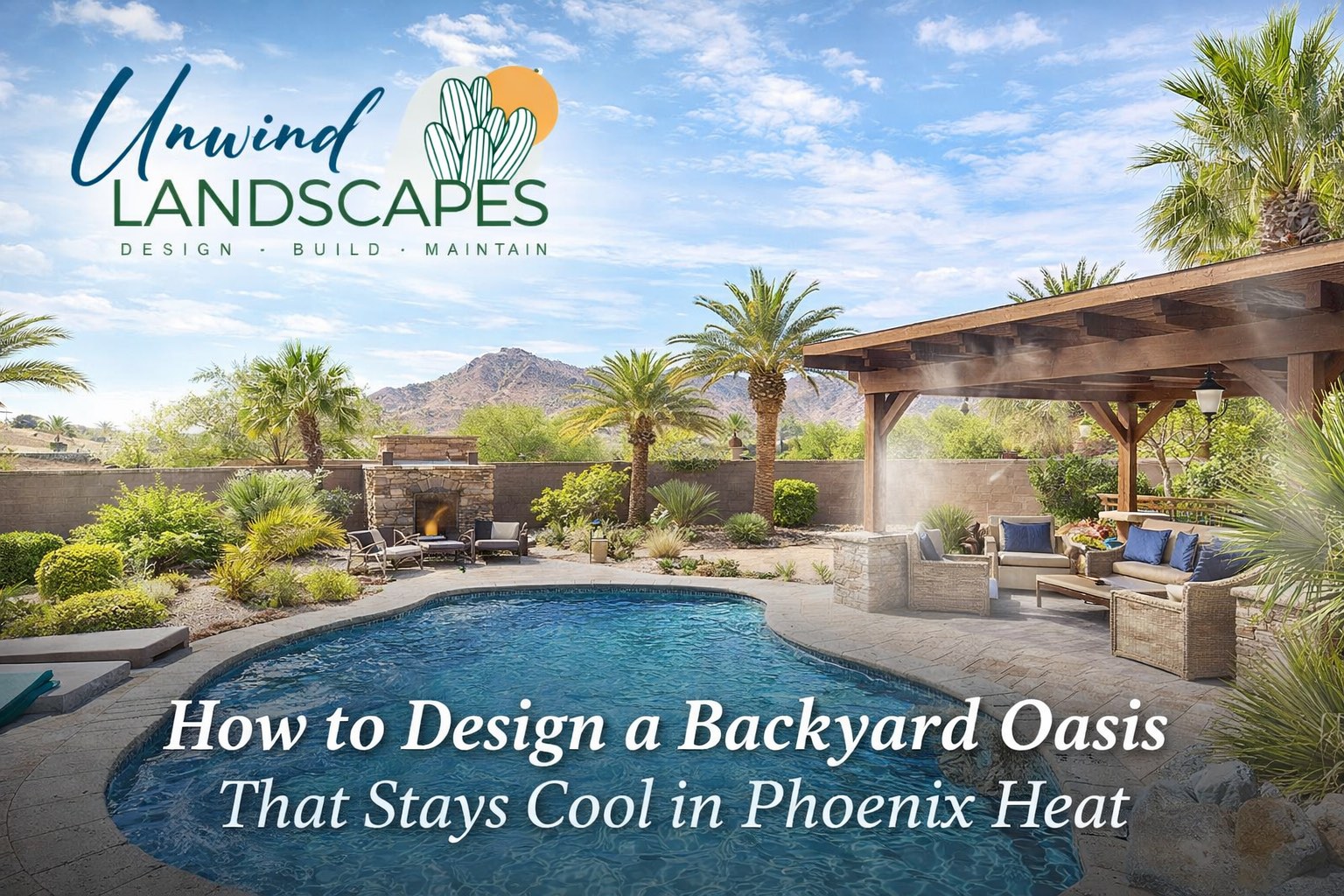
How to Design a Backyard Oasis That Stays Cool in Phoenix Heat
Creating a backyard oasis in Phoenix isn’t just about aesthetics—it’s about engineering comfort in one of the hottest climates in the country. With triple-digit temperatures, intense sun exposure, and minimal humidity, your outdoor space needs to be intentionally designed to stay usable year-round.
The good news? With the right strategy, your backyard can go from a scorching hot space to a cool, relaxing retreat you actually enjoy—even in the summer.
Start with Shade—Your #1 Cooling Priority
If you do nothing else, prioritize shade. In Phoenix, direct sunlight is the biggest contributor to heat buildup, and reducing it immediately lowers surface and air temperatures.
Options that work best:
Pergolas (filtered shade with airflow)
Ramadas (full coverage)
Shade sails (modern and flexible)
Covered patios
Shading seating areas first creates an instant “cool zone” that becomes the foundation of your design.
Create “Cool Zones” Instead of Cooling the Entire Yard
Trying to cool your entire backyard is inefficient. Instead, focus on designing strategic micro-climates—small areas that feel noticeably cooler.
A well-designed cool zone includes:
Overhead shade
Layered plant coverage
Airflow (not enclosed)
Heat-reducing ground materials
This approach makes your space more usable without unnecessary cost or complexity.
Use Trees and Plants as Natural Cooling Systems
Plants don’t just look good—they actively cool your environment.
Through a natural process called transpiration, plants release moisture into the air, helping reduce surrounding temperatures.
Smart plant placement can:
Block harsh afternoon sun (especially west-facing)
Reduce heat reflection from walls
Provide privacy without trapping heat
Shade trees are especially powerful—they can lower surrounding temperatures and even help reduce indoor cooling costs.
Choose Heat-Reflective and Cool-Touch Materials
Not all hardscaping is created equal—some materials absorb heat and radiate it back into your space long after the sun sets.
Better choices include:
Travertine (stays cool underfoot)
Limestone
Light-colored pavers
Flagstone
Avoid:
Dark concrete
Artificial turf in full sun
Heat-retaining surfaces without shade
Using the right materials can dramatically improve comfort levels.
Add Cooling Features That Actually Work
In Phoenix heat, passive cooling isn’t always enough—you need functional cooling elements.
Top-performing features:
Misting systems (can drop temps significantly)
Outdoor ceiling fans (improves airflow)
Evaporative coolers
Water features (fountains, pools, splash elements)
Misters, in particular, can make a dramatic difference when properly installed and positioned.
Reduce Heat Reflection and Retention
A hidden problem in many Phoenix backyards is radiating heat from surfaces like gravel, walls, and concrete.
To combat this:
Add ground cover or mulch instead of bare soil
Place plants near walls to block reflected heat
Use lighter colors to reflect sunlight
Break up large hardscape areas with greenery
Even small changes here can noticeably lower the temperature of your space.
Design for Airflow, Not Just Shade
A common mistake? Creating shaded areas that trap heat.
Your backyard should allow air to move freely:
Avoid fully enclosed structures without ventilation
Position seating where natural breezes pass through
Use open pergolas instead of solid covers when possible
Airflow + shade = real comfort.
Incorporate Desert-Friendly, Low-Water Landscaping
A true Phoenix oasis isn’t just cool—it’s efficient.
Desert landscaping (xeriscaping) uses plants adapted to Arizona’s climate, reducing water usage while maintaining beauty and functionality.
Benefits include:
Lower water bills
Less maintenance
Better long-term sustainability
Plants that thrive in extreme heat
Bring It All Together: Your Backyard, Reimagined
The best backyard oasis designs combine:
Shade structures
Natural plant cooling
Smart material choices
Functional cooling features
Thoughtful layout and airflow
When these elements work together, your outdoor space transforms into a cool, inviting extension of your home—even in Phoenix summer.
FAQs: Designing a Cool Backyard in Phoenix
What is the best way to keep a backyard cool in Phoenix?
The most effective strategy is combining shade structures, cooling features like misters, and strategic landscaping to reduce heat buildup.
Do plants really help cool a backyard?
Yes. Plants release moisture into the air and provide shade, both of which lower surrounding temperatures.
What materials stay coolest in Arizona heat?
Travertine, limestone, and light-colored pavers are among the best options because they reflect heat and stay cooler underfoot.
Are shade sails or pergolas better for Phoenix?
Both work well. Shade sails offer quick coverage, while pergolas provide a more permanent and customizable solution.
How much can a misting system cool an outdoor space?
Properly installed misting systems can reduce perceived temperatures by 10–20+ degrees, depending on conditions.
Is grass a good option for a Phoenix backyard?
Natural grass requires significant water and maintenance. Many homeowners opt for desert landscaping or artificial turf with proper shading.
At Unwind Landscapes, we're here to help every step of the way. As your professional Desert Landscapers in Phoenix, we take your vision from an initial Hardscape Designers Phoenix to a completed project. Let's make your outdoor space unforgettable together with a Free Landscaping Design Estimate.
This content is for general reading purposes only and should not be considered legal advice or content.